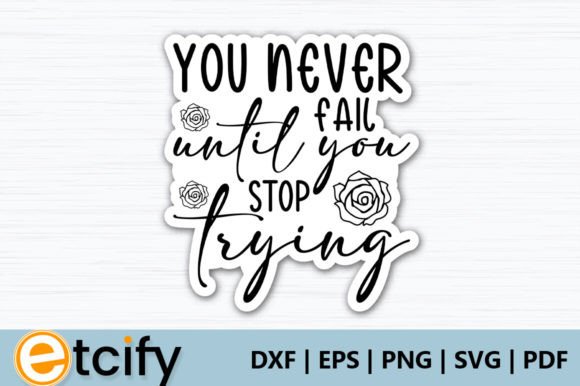
You Never Fail Until You Stop Trying
As a blog designer and digital publisher, I’m always on the lookout for graphic design assets that elevate content without overwhelming it. You Never Fail Until You Stop Trying is one such creative design that blends motivational messaging with versatile visual appeal. This graphic design asset fits naturally into the Crafts and Graphics space, offering something that feels both professional and personal.
The First Impression: A Mood of Perseverance
You Never Fail Until You Stop Trying immediately sets a tone of resilience and determination. The design exudes a modern, clean aesthetic that feels confident yet approachable. It’s not overly flashy, but it has a strong visual presence that can make a lasting impression on readers. This makes it ideal for content niches focused on personal development, entrepreneurship, and creative work.
The bold typography and simple layout create a sense of clarity, which is essential for editorial design. It doesn’t shout, but it commands attention in a way that supports content marketing efforts. Whether used as a blog header or a social media graphic, it communicates a message that resonates with a wide audience.
Real-World Publishing Use Cases
This graphic design asset is incredibly versatile. It works well as a blog featured image, helping to draw readers in with its strong visual identity. For Pinterest, it serves as an eye-catching pin that stands out in a crowded feed. As an article header, it adds a touch of professionalism that aligns with high-quality editorial design.
You Never Fail Until You Stop Trying can also be used as a website header, reinforcing brand identity across multiple pages. In newsletter graphics, it acts as a powerful visual cue that supports the message of perseverance and growth. As a lead magnet or downloadable printable, it adds value to content upgrades and digital guides.
For affiliate marketing, this design can be integrated into social media graphics or digital ads, creating a consistent visual language that builds trust with audiences. It also works as a Canva template, making it easy for content creators to customize and use across different platforms.
Boosting Content Performance
Visual hierarchy is key in web design, and You Never Fail Until You Stop Trying helps establish that clearly. Its strong composition ensures that the message is communicated effectively, which can improve click-through rates and reader engagement. When paired with the right headline text, it creates a compelling first impression that encourages readers to explore further.
Consistent branding is another benefit. Using this design asset across multiple content formats—like blog posts, social media posts, and email campaigns—helps build a cohesive brand identity. This consistency strengthens reader trust and makes the content more recognizable.
It also supports better category recognition. For blogs with multiple topics, having a unified visual style helps readers navigate the site more easily. You Never Fail Until You Stop Trying can act as a recurring visual element that reinforces the brand’s message and values.
Where It Works Best
This design shines in hero images, where it can capture attention and set the tone for a post or page. As an article thumbnail, it provides a clear visual that complements the title and encourages clicks. In Pinterest pins, it stands out as a unique and engaging graphic that drives traffic to the blog.
It also works well as a blog graphic, adding visual interest without distracting from the content. In editorial accents, it enhances the overall look of a piece without overpowering it. As a downloadable resource, it adds value to digital guides and worksheets, making them more appealing to users.
For newsletter headers and social media previews, it offers a polished look that aligns with professional standards. It’s a great choice for content that needs to feel both creative and credible.
Where to Use It Carefully
While You Never Fail Until You Stop Trying is a strong design, it may not work in every context. On small mobile thumbnails, the details might get lost, making it less effective. In text-heavy blog images, it could compete with the copy instead of supporting it.
Low-contrast backgrounds may cause readability issues, so it’s important to test it against different color schemes. In busy layouts, it could feel out of place, so it’s best used in simpler, cleaner designs. For serious professional niches or corporate content, it may not align with the desired tone.
If a website relies on a minimal visual system, this design could feel too bold. It’s important to consider the overall aesthetic before integrating it into the site’s design.
Publisher Notes: Testing and Optimization
Before using You Never Fail Until You Stop Trying in real publishing projects, it’s essential to test it on both desktop and mobile screens. Check how it looks as a thumbnail and preview it inside a real blog layout to see how it interacts with other elements.
Test it with headline text to ensure it complements the message rather than clashing with it. Check contrast and readability, especially if it will be used on dark or light backgrounds. Try it in black and white to see how it holds up without color.
Place it beside different font styles—serif, sans serif, script, handwritten, and display—to see how it adapts. Review the file size for web performance, and compress images properly to ensure fast loading times.
Finally, confirm the commercial license before using it on monetized websites, affiliate pages, or paid content products. This ensures that it can be used freely without legal issues.
Conclusion: A Motivational Asset for Creative Publishing
You Never Fail Until You Stop Trying is more than just a graphic design asset—it’s a tool that supports content marketing, editorial design, and brand identity. Its clean, modern look makes it suitable for a wide range of publishing needs, from blog headers to social media graphics.
Whether you’re a small business owner, a digital marketer, or a creative entrepreneur, this design can help elevate your content and make it more visually compelling. With proper testing and optimization, it can become a valuable part of your digital toolkit.